With Mother’s Day just beyond the horizon, we’re turning our gaze not to quiet hearths and gentle lullabies, but to something far older . . . and far more powerful.
Across myth and legend, mothers have shaped worlds, defied death, unleashed vengeance, and given rise to creatures of wonder and terror alike.
Some nurture.
Some destroy.
And some do both.
Today, we’re stepping into a handful of these unforgettable figures drawn from ancient myth, epic poetry, and the realms of fantasy.
Come explore . . . if you dare.
Hey, thanks for reading Rediscovered Realms! Join 3,000+ other adventurers for FREE (butConsider a PAID Subscription for a ton of epic perks) to receive weekly fun fantasy posts and Keep the Adventure Going Strong!
This post may contain affiliate links, which means we may receive a commission, at no cost to you, if you make a purchase through a link.
Echoes of Power — Across the Ages of Legend
Across the ages, these stories have lingered . . . whispered through ancient texts, etched into legend, and carried forward into the worlds of fantasy we still explore today.
Some speak of devotion and protection. Others of vengeance, transformation, and power unleashed.
Each one leaves an echo.
And if you listen closely . . . you’ll find the same truth beneath them all:
These are not just tales of heroes and monsters - but of the forces that shaped them.
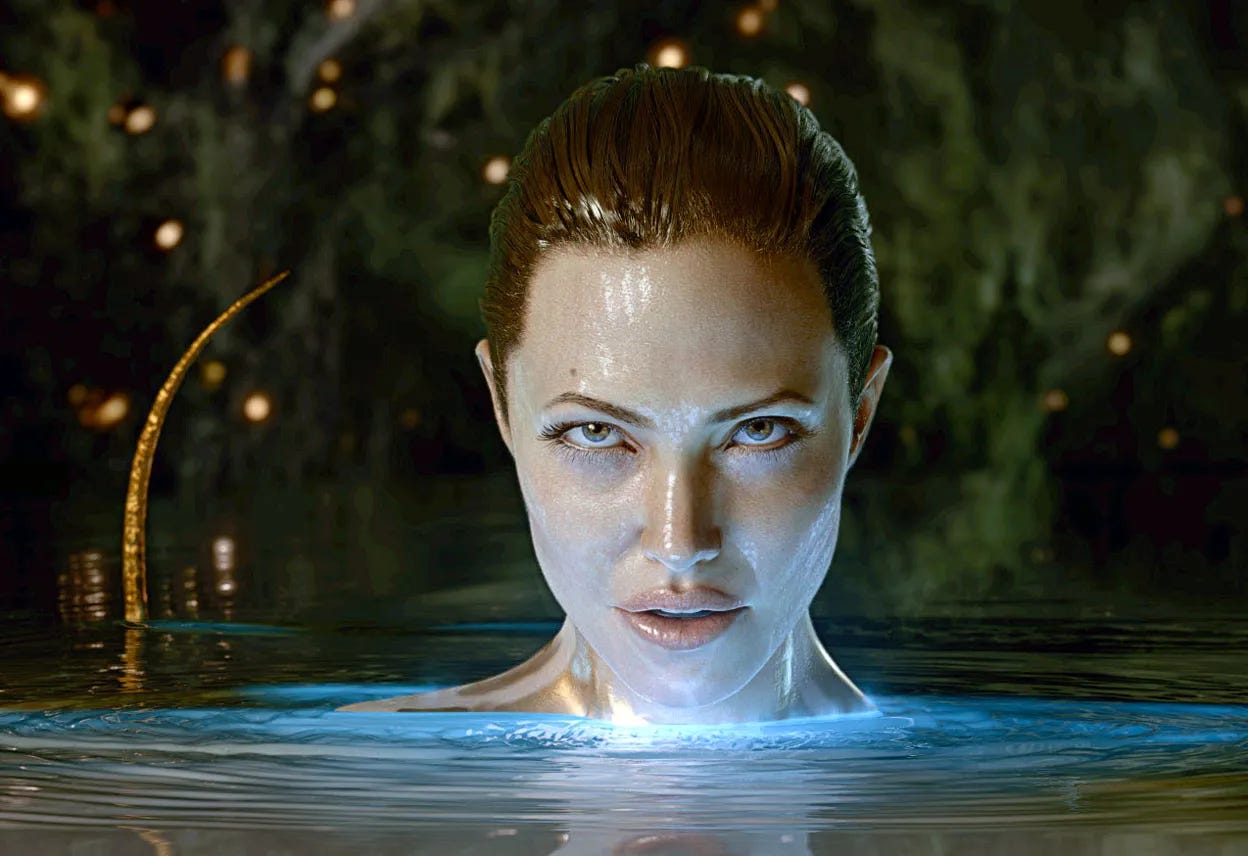
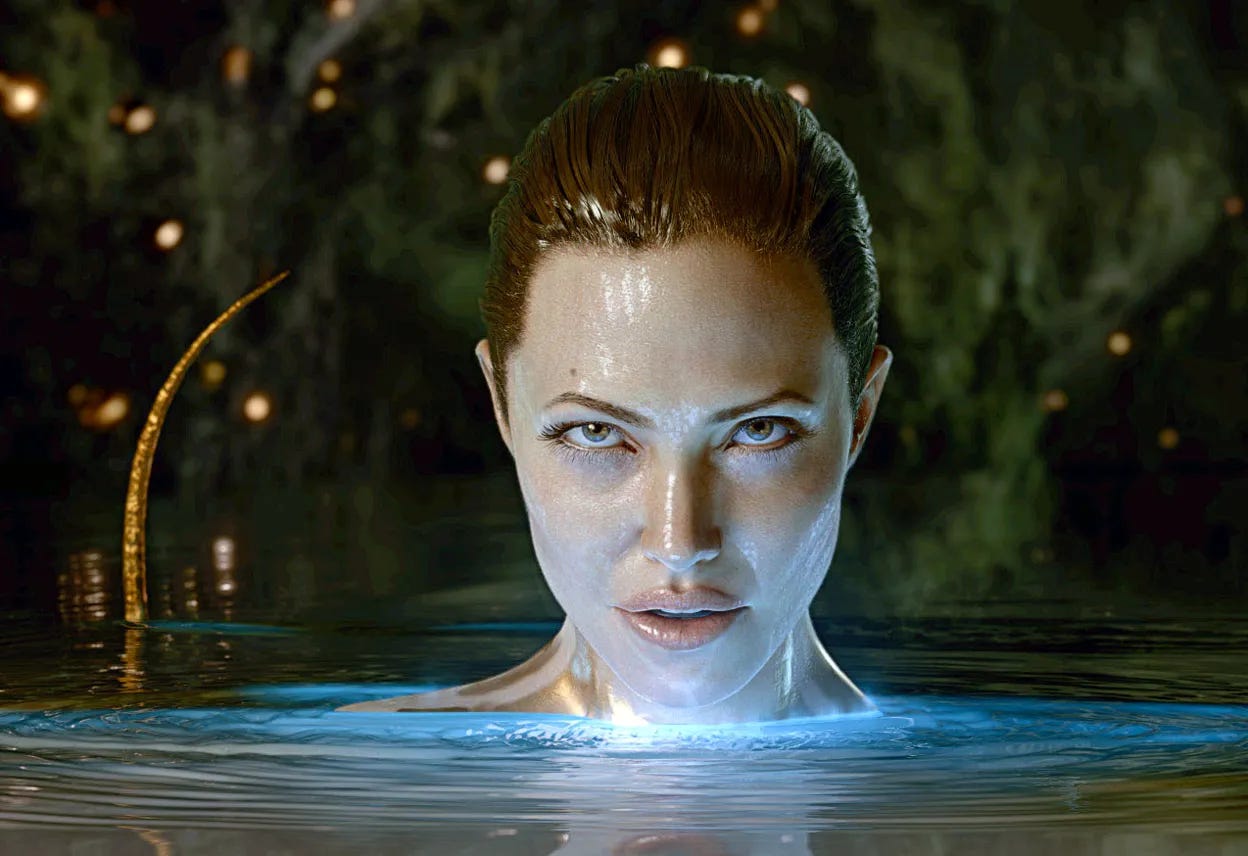
Grendel’s Mother
From the 2007 film, Beowulf
A shadow-dwelling terror lurking in her underwater lair beneath the dark mere
Not just a monster - but a mother in mourning
Strikes not for conquest, but for vengeance
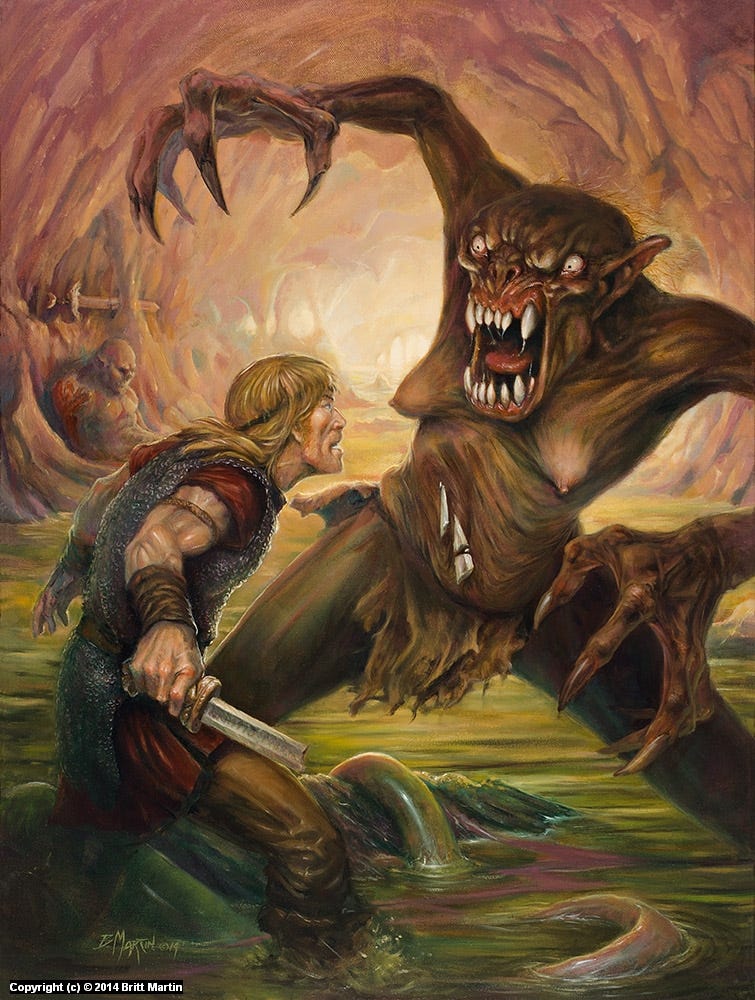
The Tale: After Grendel is slain by Beowulf, his mother rises from the depths of her subterranean lake to avenge him. She storms the great hall of Heorot, kills one of the king’s men, and retreats to her underwater lair. Beowulf follows, diving into her domain - where the fight turns brutal, desperate, and deeply personal. This is no random monster encounter . . . it is a reckoning.
Beowulf’s Battle by Britt Martin, 2014
Did you know? Grendel’s mother is never actually named in Beowulf. She’s defined entirely by her role - her identity bound to motherhood and loss.
Lesson: Even the darkest creatures carry love . . . and loss
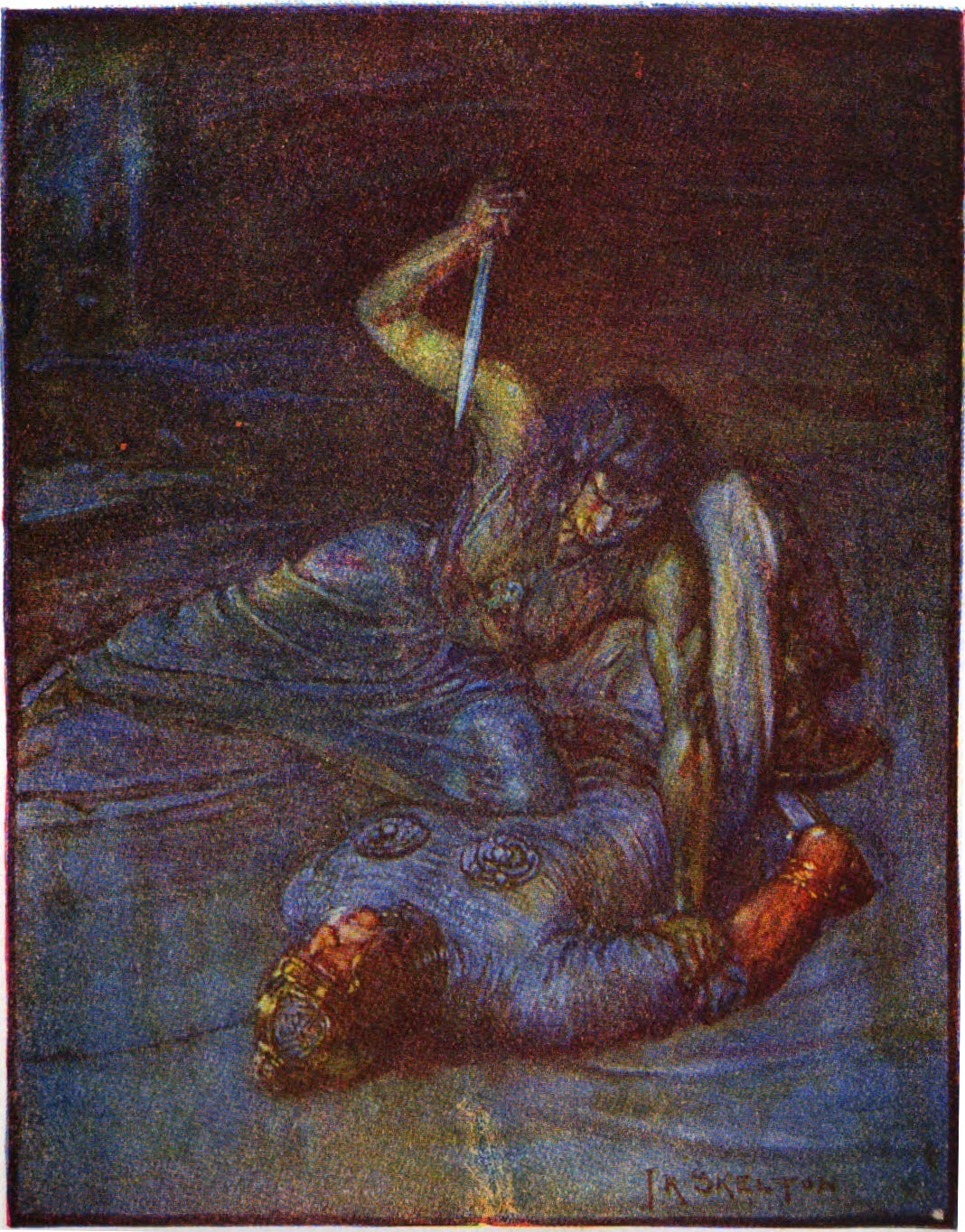
An illustration of the water witch trying to stab Beowulf. Marshall, Henrietta Elizabeth (1908) Stories of Beowulf, T.C. & E.C. Jack, p. 59 Stories of Beowulf-1 Page 082 Image 0002.jpg
“Then she bore him to the bottom, the mother of Grendel, The fierce-hearted woman. The warrior was powerless To keep from going to the ground. She grasped him then firmly, And sat on the hall-guest. Her dagger was ready, Keen-edged and deadly, to give him his death-wound.
But the woven corslet which covered his body, The linked coat of mail, held fast against the weapon, So that neither edge nor point might avail her to pierce him.
Then the son of Ecgtheow found in his might That he could not prevail with the sword that he wielded…
So the stout-hearted hero threw down his weapon, Trusted no longer to the edge of his sword, But grasped her by the shoulder; his strength was abundant, As fate would allow him; he dashed her to the ground.
She quickly returned him his fierce grapple again, And seized on the warrior. Wearied, he staggered, The strongest of fighters; she flung him to earth.”
- Beowulf, Trans. John Lesslie Hall (1892), lines ~1490–1560
Morgan le Fay
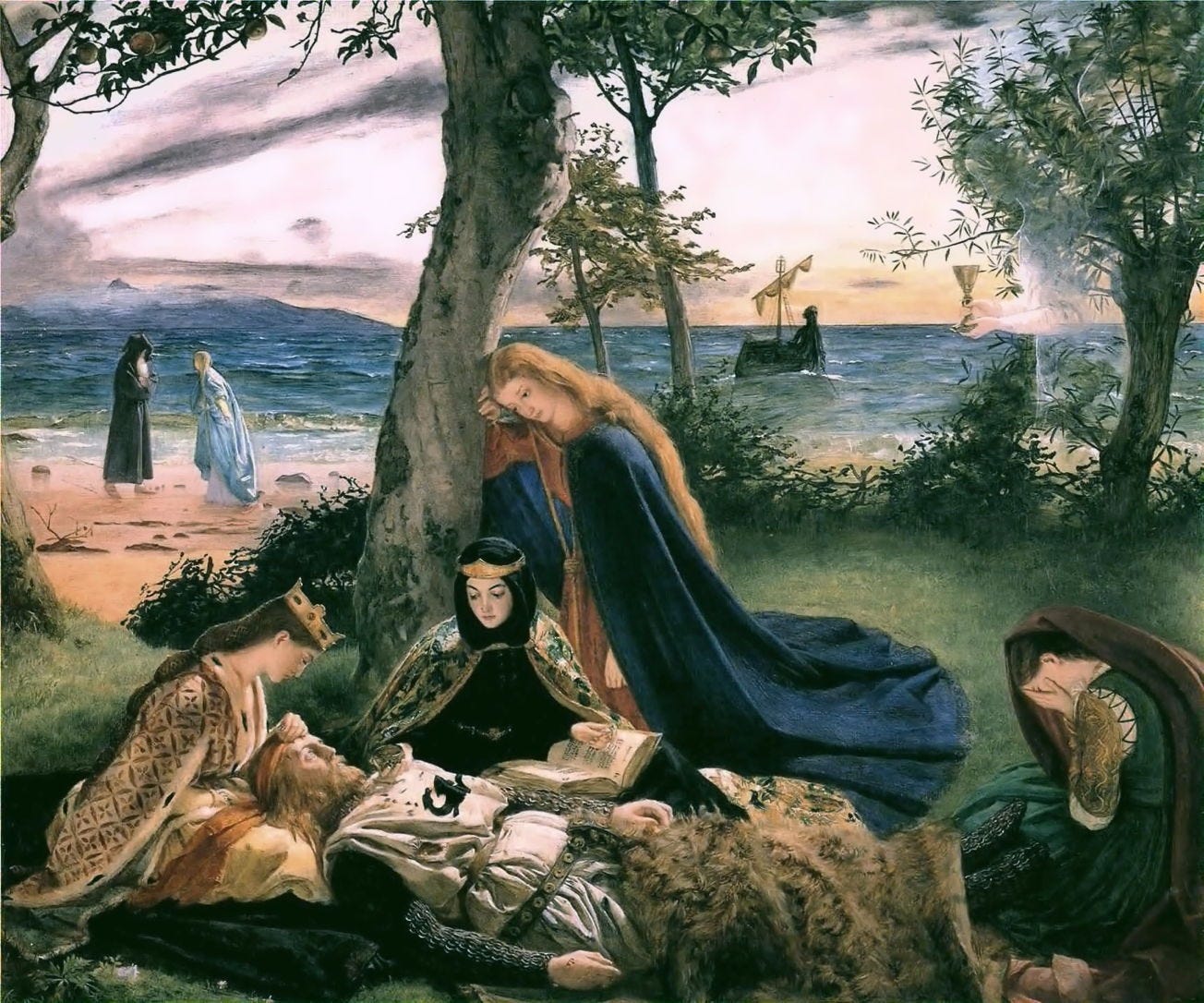
When Arthur is mortally wounded at the Battle of Camlann, Morgan is joined by the Queen of the Northgales, the Queen of the Wasteland, and the enchantress Nimue to transport Arthur in their black boat to Avalon. James Archer (1823–1904), The Death of King Arthur (c 1860), oil on canvas, dimensions and location not known. Wikimedia Commons.
Sorceress of shifting loyalties and hidden motives
Sister, rival, and architect of fate
A figure who reshapes destiny through will and magic
The Tale: In the tangled legends of Camelot, Morgan le Fay moves like a shadow behind the throne. Sometimes healer, sometimes enemy, she studies magic and bends it to her will — scheming against King Arthur, yet also guiding his fate. In some tellings, she becomes a mother figure herself, raising powerful sons and shaping bloodlines that ripple through the realm. When Arthur falls, it is often Morgan who carries him to Avalon . . . not as enemy, but as something far more complicated.
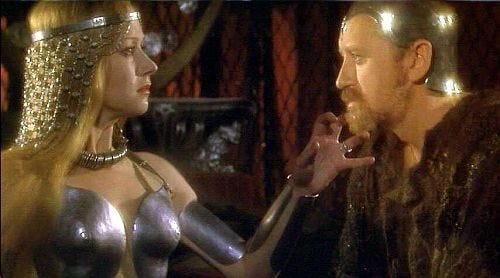
Helen Mirren as Morgan Le Fay in Excalibur (1981)
Did you know? Morgan wasn’t always a villain - early versions of her legend portray her as a benevolent healer before later stories darkened her role.
Lesson: Power doesn’t just nurture . . . it transforms
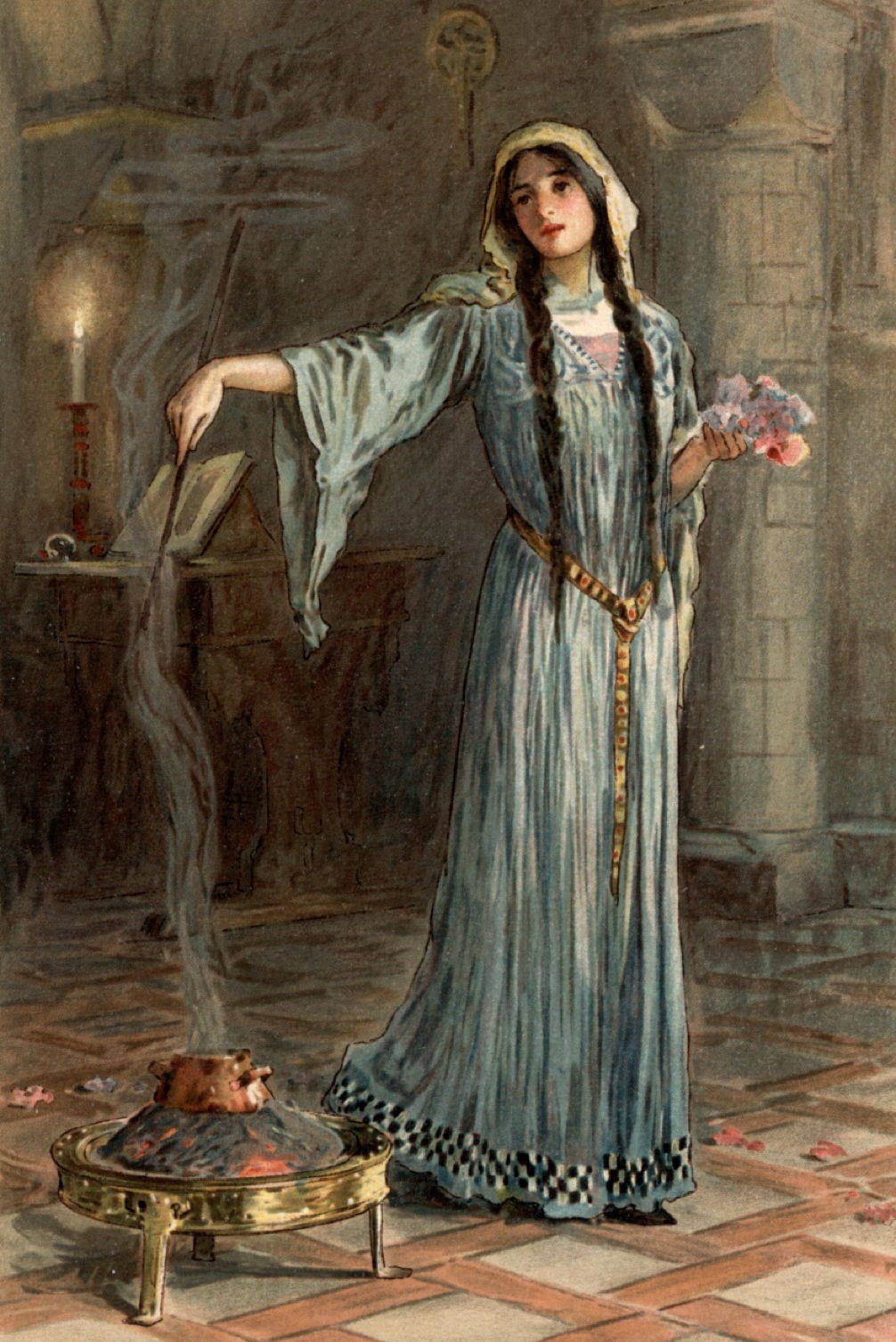
William Henry Margetson (1861-1940), ‘She was known to have studied magic while he was being brought up in the nunnery (1914), illustration for ‘Legends of King Arthur and His Knights’, James Knowles, further details not known. Wikimedia Commons.
“Then Morgan le Fay was sore displeased with Sir Launcelot, and thought to work him great shame. And so she sent him a rich mantle, the which should burn him to death when he had put it upon him.
Then she bade the damsel say that it was sent him for a great gift. And so the damsel came to Sir Launcelot and brought him the mantle. But King Arthur would not suffer him to put it upon him, but said he would see it first proved upon her that brought it.
And when the damsel had put it upon her, anon it burnt her to ashes.”
- Le Morte d’Arthur (1485)
Ishtar
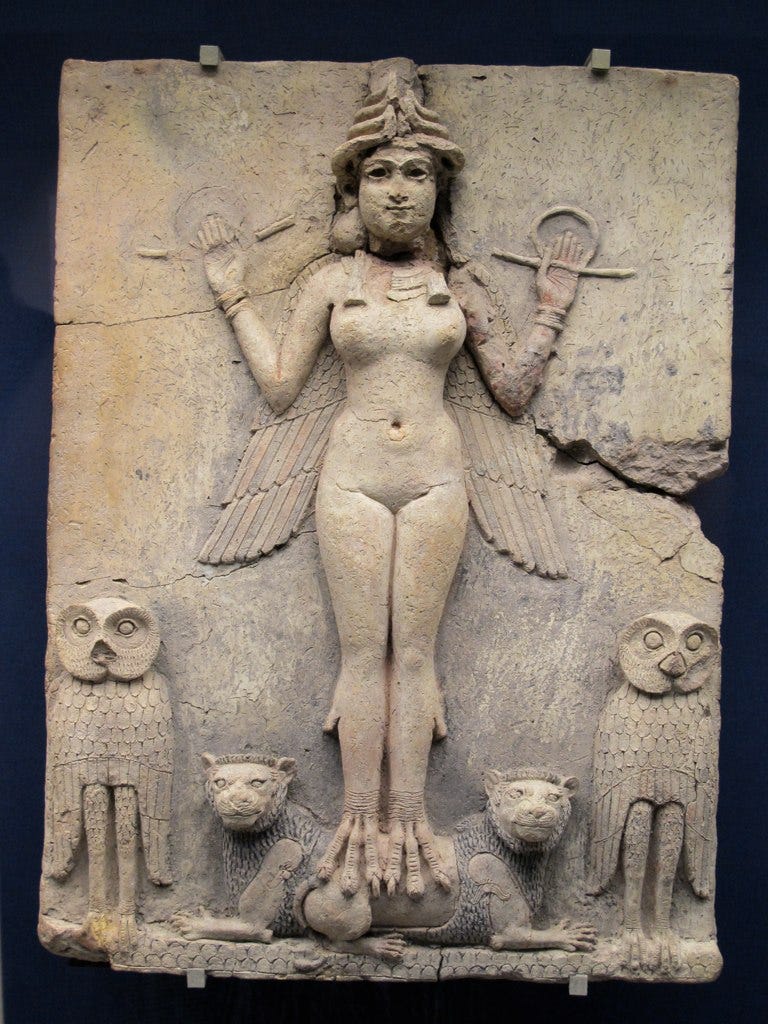
The 'Queen of the Night' Relief, The figure could be an aspect of the goddess Ishtar, Mesopotamian goddess of sexual love and war. Her bird-feet and accompanying owls have suggested to some a connection with Lilitu (called Lilith in Jewish lore), though seemingly not the usual demonic Lilitu. Old Babylonian, 1800-1750 BC. From southern Iraq.
Goddess of love, war, and fertility
Fierce, unpredictable, and impossible to contain
Walks freely between passion and destruction
The Tale: Known also as Inanna, Ishtar descends into the underworld — stripped of her power piece by piece as she passes through its gates. Killed and hung like a corpse, she is later restored to life and returns to the world above. But her return comes with consequence: balance must be paid. Lovers are cast aside. Kingdoms tremble. Ishtar does not simply nurture life . . . she demands it.
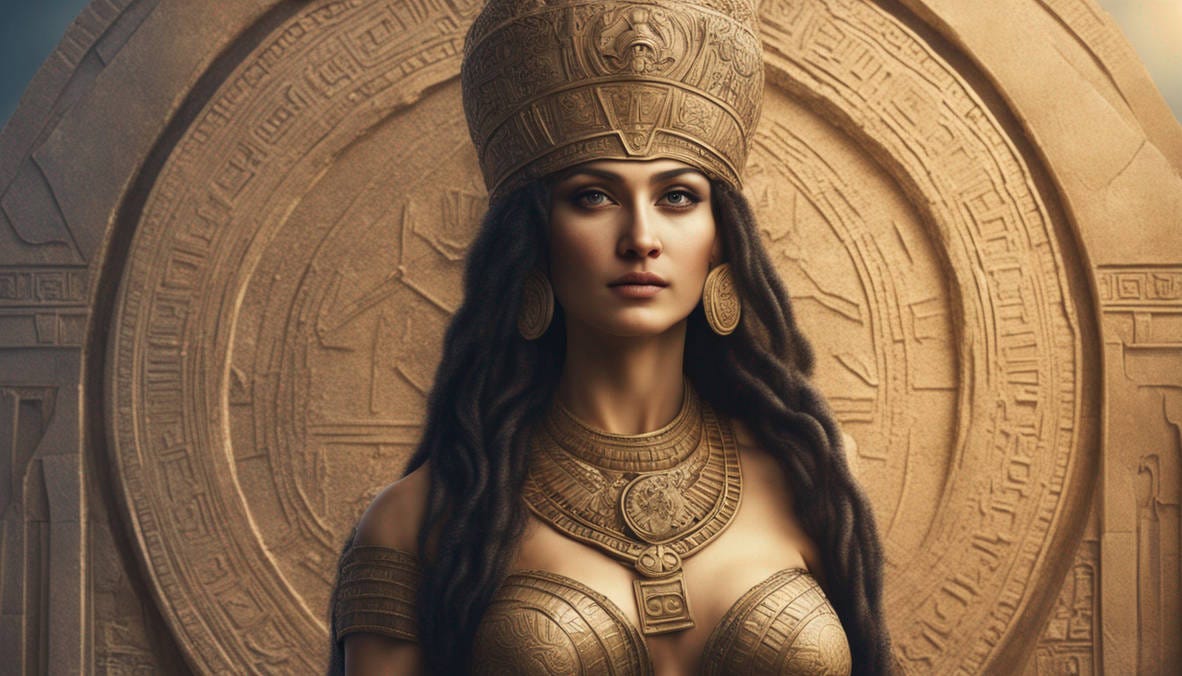
Inanna by AzraelSeraph on DeviantArt, created with DreamUp AI art
Did you know? Ishtar is one of the earliest recorded deities in human history—her worship dates back over 4,000 years.
Lesson: Creation and chaos are often one and the same
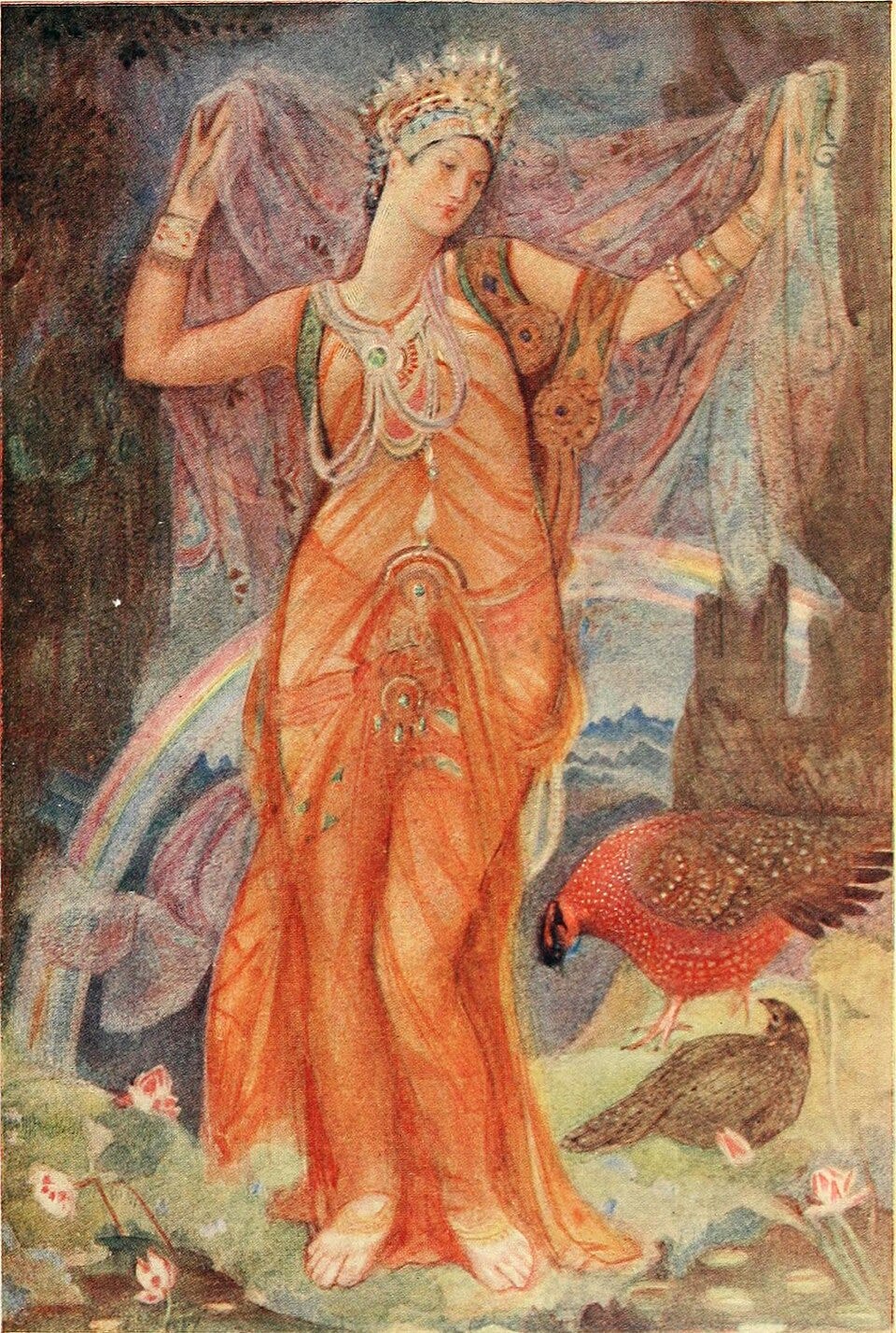
A modern illustration depicting Inanna-Ishtar’s descent into the Underworld taken from Lewis Spence’s Myths and Legends of Babylonia and Assyria (1916)
“At the first gate she removed the great crown from her head. At the second gate she removed the earrings from her ears. At the third gate she removed the necklace from her neck.
Thus was Ishtar stripped of her power as she passed through the seven gates of the underworld, until she stood bare and bowed low in the land of no return. And there she was struck down and hung upon a hook.”
- The Descent of Ishtar into the Underworld, Budge (1915)
Isis
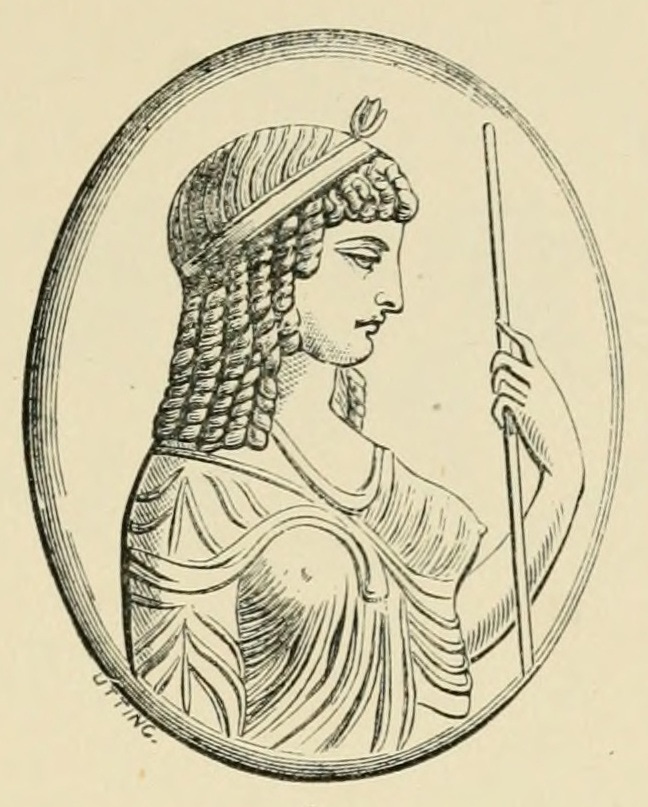
Isis, crowned with the lotus and bearing the sceptre. An intaglio, of Ptolemaic date, in sardonyx. Sketch created in 1885
Devoted mother and master of magic
Reassembled Osiris and defied death itself
Protector of her child — and of entire kingdoms
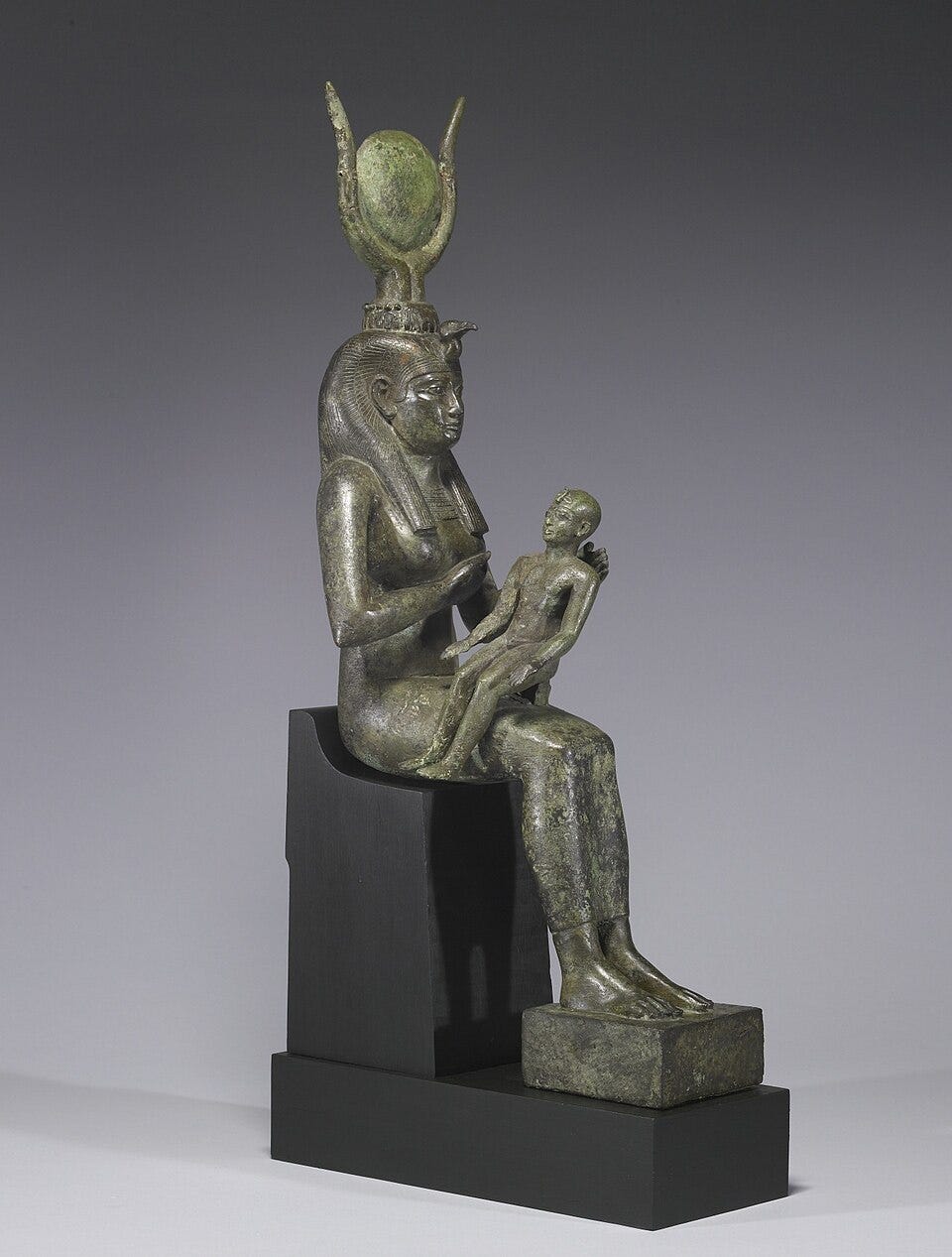
The Tale: When her husband Osiris is murdered and scattered across the land, Isis gathers his pieces and restores him through powerful magic. From this act, she conceives and protects her son Horus, hiding him from danger until he is strong enough to reclaim his birthright. Isis is patient, cunning, and unwavering — a mother who reshapes destiny through devotion.
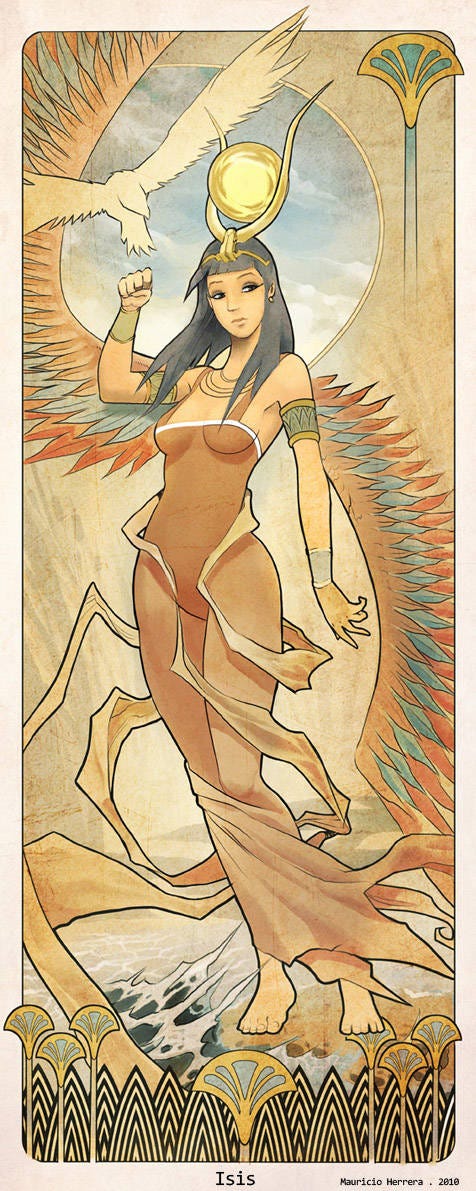
Isis by elgrimlock on DeviantArt, 2010
Did you know? The image of Isis nursing Horus is believed to have influenced later artistic depictions of the Virgin Mary and infant Jesus.
Lesson: Love is a force strong enough to defy fate
Isis nursing Horus, a sculpture from the 7th century BCE
“Then Isis went to and fro upon the earth, seeking the body of Osiris. She wandered through many lands in grief and in longing, gathering together his scattered limbs wherever she found them.
And when she had made him whole again, she used her magic and her words of power, and from death she brought forth life once more.”
- paraphrased from the accounts of Plutarch in “On Isis and Osiris” (1st-2nd century AD)
Medusa
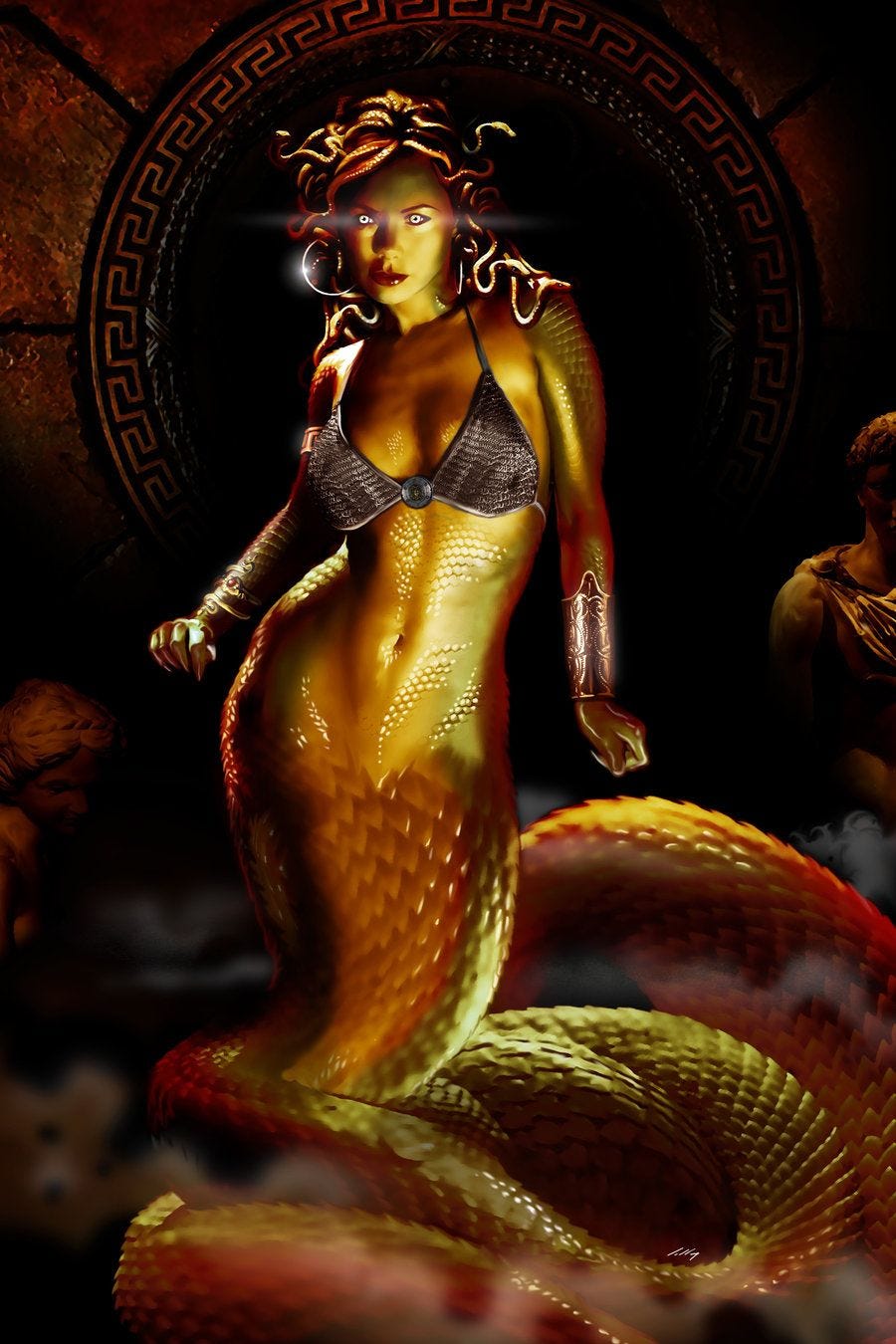
Medusa. artist unknown
A beauty transformed into a monster by cruelty and curse
Feared for her gaze, but remembered for what came after
From her death sprang Pegasus—fully formed, myth made flesh
The Tale: Once a maiden of surpassing beauty and priestess in Athena’s temple, Medusa is transformed into a Gorgon after being cursed by Athena for desecrating the temple after Poseidon assaulted her there. Banished and feared, she becomes a creature whose gaze turns all to stone. When Perseus finally beheads her, something astonishing happens — life erupts from death. Pegasus, the winged horse, bursts forth from her neck, along with his brother Chrysaor. From horror . . . comes wonder.
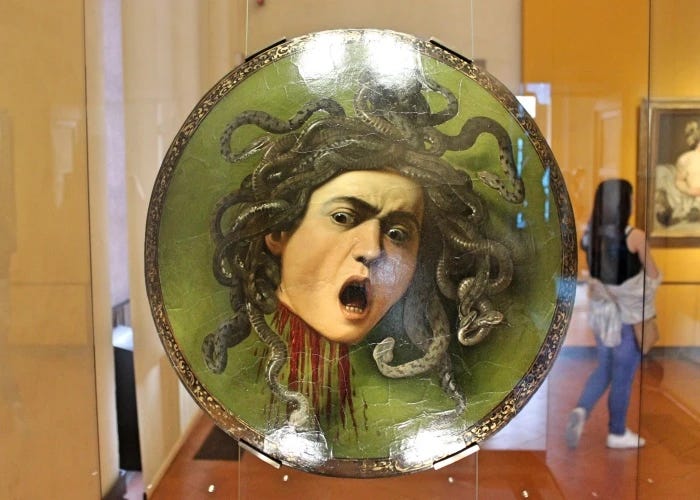
Caravaggio’s "Head of Medusa" (c. 1597) captures the moment of Medusa’s decapitation with striking realism and dramatic intensity, painted on a convex ceremonial shield and housed in the Uffizi Gallery, Florence.
Did you know? Pegasus was not born in the traditional sense - he emerged fully grown in an instant, making him one of mythology’s most unusual “births.”
Lesson: From destruction can come something extraordinary - beauty born from horror, legend from tragedy.
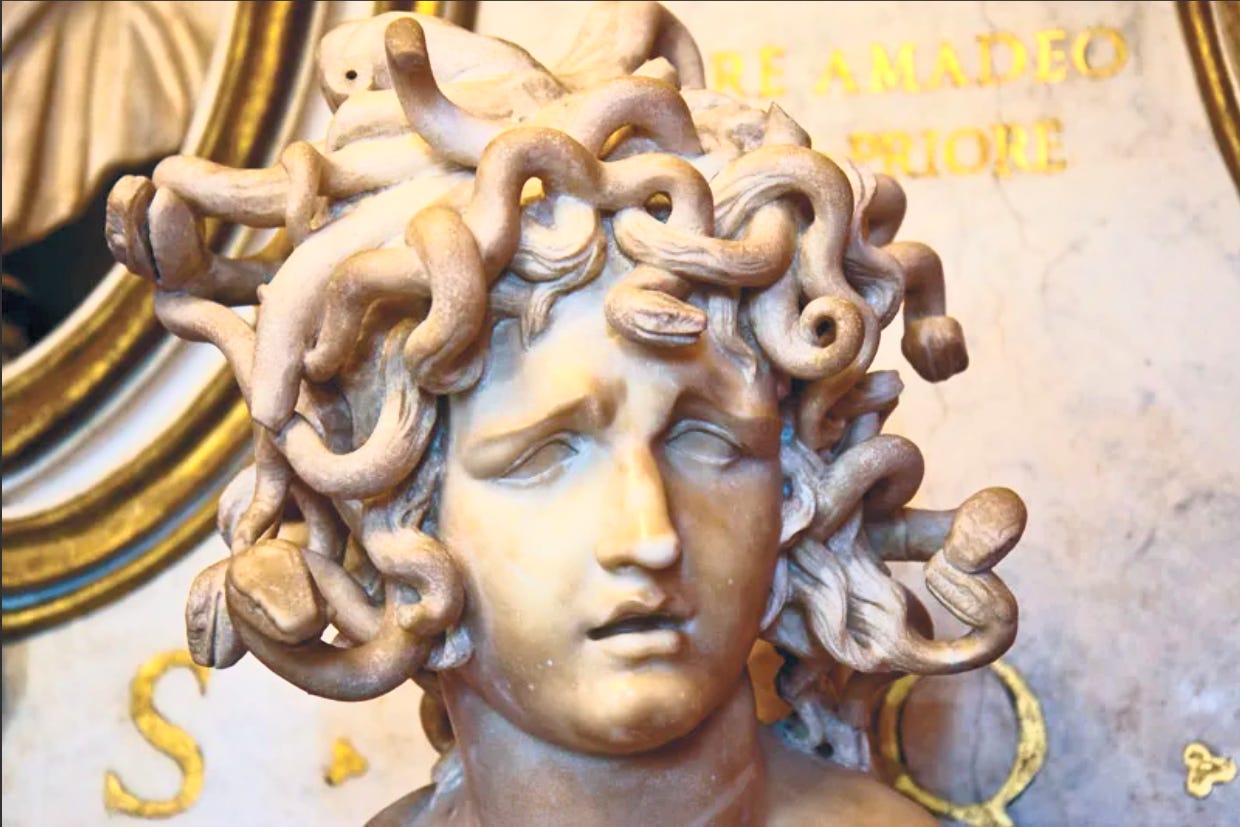
Medusa, marble sculpture by Gian Lorenzo Bernini, 1630; in the Capitoline Museums, Rome.
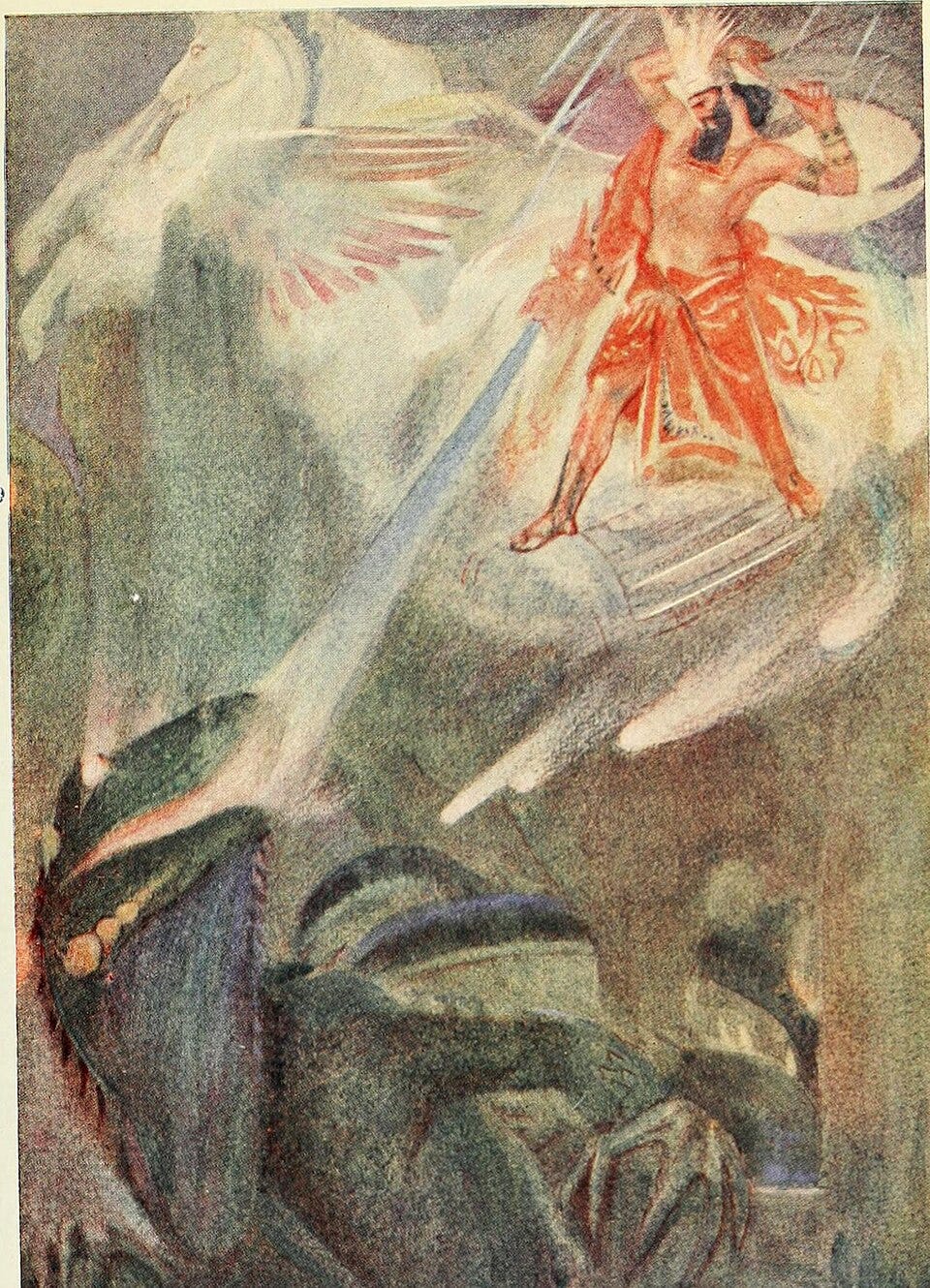
“Then Perseus struck, and from the neck of Medusa sprang forth Pegasus, the swift-winged horse, and his brother Chrysaor, born of that monstrous death.
So from the blood of the Gorgon there came life, sudden and wondrous, where only terror had dwelt before.”
A force of creation that becomes a force of destruction
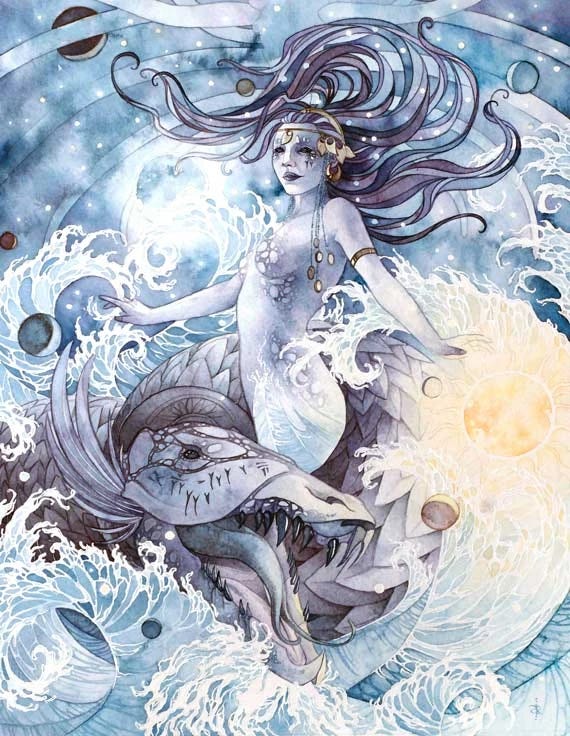
The Tale: In the ancient Babylonian epic Enuma Elish, Tiamat begins not as a villain — but as a creator. From her vast, churning waters, the first gods are born. But as these younger gods grow noisy and rebellious, conflict erupts. When her consort is slain, Tiamat transforms — rising in fury, birthing monstrous armies, and declaring war on her own offspring. The storm god Marduk ultimately defeats her, splitting her body to form the heavens and the earth. From her destruction . . . the world itself is shaped.
Did you know? Tiamat is one of the earliest recorded “dragon-like” beings in mythology and unlike later dragons, she is both the origin of creation and the embodiment of chaos.
Lesson: From the first mother came both creation and catastrophe. Order is often born from the breaking of something ancient.
“Tiamat created the viper, the dragon, and the monster; she clothed them with terror and crowned them with glory, and made them like gods.
And she set them forth for battle against the younger gods, raising up a host of dread beings, born of her fury and her power.”
- Enuma Elish (The Seven Tablets of Creation; translation by L.W. King, 1902)
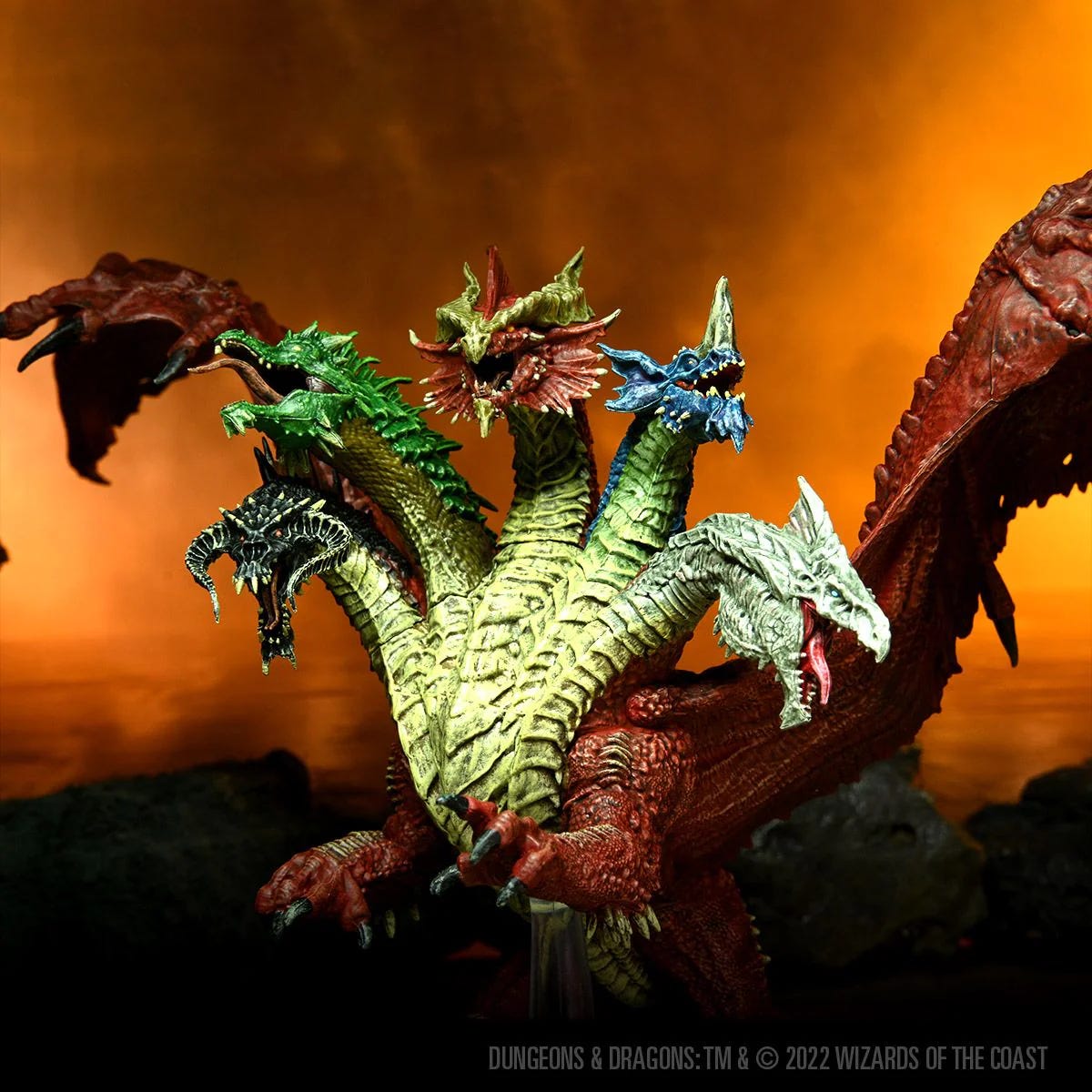
D&D Icons of the Realms Tiamat
Tiamat’s legacy endures even in modern fantasy, where Dungeons & Dragons reimagines her as the five-headed Queen of Chromatic Dragons!
And there you have it - a glimpse into the many faces of motherhood as told through myth, legend, and the echoes of fantasy that still linger today . . .
Some protected. Some avenged. Some reshaped the very fabric of the world itself.
But all of them left their mark - etched into story, carried through time, and waiting for us to rediscover them once more.
Perhaps that’s the real magic of these tales.
Not that they show us what mothers should be . . .
But that they remind us how powerful they’ve always been.
Don’t ever forget, Dutiful Adventurer, that every legend has a beginning - and often, a mighty mother behind it. If you’re able, take a moment to honor the mighty mother in your own origin story, whether in word, memory, or quiet gratitude.
💬Tavern Talk
❓Which of these legendary mothers stood out to you the most — and why?
❓If you had to face one of these figures on your next adventure, which would you choose — and which would you avoid at all costs?
“Remember to check out the Rediscovered Realms Amazon Storefront for the most epic gift-giving ideas for those important adventurers in your life (including yourself 🗡)” - Brodryk (Shopkeep)
(As an AmazonAssociate1 I earn from qualifying purchases)
Your next piece of fantasy fun is calling.
Remember to check out the Rediscovered Realms Amazon Storefront for the most epic gift-giving ideas for those important adventurers in your life (including yourself 🗡)
You are not only brave, but a Generous Adventurer whose love of Discovery, Imagination & Fun transcends our mere mortal coils . . .
Spread Adventure Awesomeness! Don’t just Stare - SHARE! If you know other Adventurers who would enjoy this newsletter, please share it with them directly or on social media.
Growing up, I was immersed in Greek/Roman mythology and Arthurian legends before I came to RPGs. So Morgan le Fey and Medusa are the most familiar, and Tiamat, in the actual mythology, the least.




Growing up, I was immersed in Greek/Roman mythology and Arthurian legends before I came to RPGs. So Morgan le Fey and Medusa are the most familiar, and Tiamat, in the actual mythology, the least.